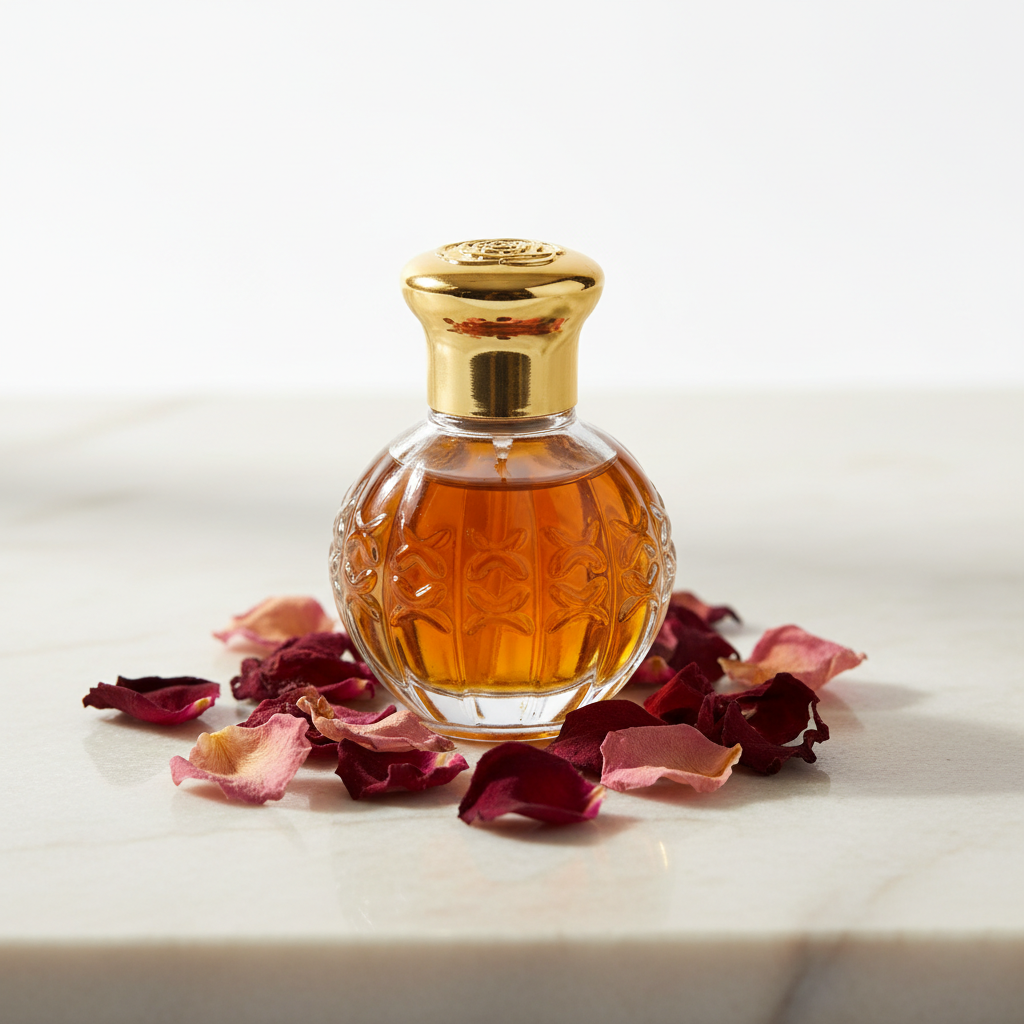
Kannauj: The Soul of Indian Perfumery
Nestled in the heartland of Uttar Pradesh, Kannauj stands as a living monument to the art of fragrance. For over 400 years, this ancient city has been synonymous with attar—a term derived from the Arabic word meaning "essence." Kannauj's mastery in perfume-making is not merely a craft; it is a sacred tradition passed down through generations, where perfumers are as revered as poets, and each fragrance tells a story of devotion and expertise.
A Legacy of Four Centuries
The history of Kannauj attar stretches back to the Mughal era, when the city became a beacon for traders seeking the finest fragrances in the Indian subcontinent. Emperor Akbar himself was known to maintain a royal attar laboratory in his court, and it was the craftsmen of Kannauj who supplied the choicest essences to the palaces of emperors and nawabs.
During the Mughal golden age, Kannauj was part of a thriving trade route that connected India with Persia, Arabia, and Central Asia. Merchants would traverse the Silk Road specifically to procure Kannauj attars, which were considered unparalleled in purity and fragrance complexity. The city became so renowned that the term "Kannauj attar" became synonymous with authenticity and quality across the Muslim world.
What makes Kannauj exceptional is not just the knowledge of distillation, but the deep understanding of regional raw materials. The city sits in a region abundant with jasmine fields, rose gardens, and medicinal herbs. Generations of perfumers learned to blend these local resources with imported essences from Kashmir, Assam, and beyond, creating fragrances that are uniquely Indian yet universally appealing.
The Ancient Art of Deg-Bhapka
At the heart of Kannauj's perfume-making tradition lies an ancient distillation method called "deg-bhapka"—a technique so refined that it remains largely unchanged even after centuries. The deg (earthen pot) and bhapka (condenser) represent the perfect marriage of science and craftsmanship.
The Deg-Bhapka Method: Flowers are collected at dawn when their fragrance is most concentrated. They are placed in a large earthen pot (deg) filled with water and heated gently over a slow flame. As steam rises from the pot, it carries the essence of the flowers. This fragrant steam passes through a condenser (bhapka) where it cools and transforms into liquid form. The oil that separates from the water is the pure attar. This process requires meticulous temperature control and can take anywhere from 12 to 48 hours for a single batch, depending on the flower variety and the desired concentration.
What distinguishes deg-bhapka from modern distillation methods is its gentleness. The slow, regulated heat preserves the delicate aromatic compounds that give Kannauj attars their characteristic complexity and longevity. Modern industrial distillation, while faster, often damages these subtle molecules, resulting in fragrances that lack depth and fade quickly.
The perfumers of Kannauj guard their deg-bhapka setups like treasures. These earthen pots are handcrafted by specialized artisans and take months to season properly. A well-maintained deg can last for generations, and many of the largest attar producers in Kannauj use equipment that has been in their families for over a century.
The Varieties of Kannauj Attar
Kannauj produces an astonishing variety of attars, each with its own character, production method, and cultural significance. Rose attar (gulab attar) is perhaps the most famous—made from the petals of Damask roses that bloom once a year. A single batch might require thousands of rose petals to produce just a few milliliters of pure essence, which explains why genuine rose attar commands premium prices.
Jasmine attar (chameli), another jewel in Kannauj's crown, carries the intoxicating sweetness of jasmine flowers. Unlike rose, jasmine blooms at night, and the flowers must be harvested after sunset to capture their most potent fragrance. The extraction process is even more delicate than rose, as jasmine petals are more fragile.
Then there are the noble attars—sandalwood, amber, oud, and musk blends—created by master perfumers who spend years learning the art of harmonizing different essences. These are not simple flower extracts but complex compositions that might include 20 or more different ingredients, balanced in precise proportions to create a fragrance that evolves over time.
Majmua: The Perfumer's Canvas
One of the most fascinating categories of Kannauj attar is "majmua"—an Urdu word meaning "collection" or "bouquet." Majmua attars are master blends created by veteran perfumers who combine multiple floral and woody essences to create completely new fragrances. These are not commercial products but rather the creative expressions of individual artisans.
Making majmua is an art form that requires decades of training. A perfumer must develop an extraordinarily sensitive nose, capable of detecting and remembering thousands of different scents. They must understand how different essences interact chemically, which ones complement each other, and how the blend will evolve over hours, days, and years. A truly exceptional majmua might be requested by only a handful of collectors worldwide, each batch slightly different as the perfumer adjusts the composition based on the quality of ingredients available in that season.
Kannauj's Famous Perfumers: The city is home to legendary attar houses, some operating for more than 250 years. Names like Nemat, Hakim, and Shrinath are not just commercial brands but custodians of fragrance traditions. When a Kannauj master passes away, the loss is felt across the global fragrance community. These are individuals who have shaped the olfactory landscape of the subcontinent.
The Craft Today: Tradition Meets Modern Challenges
In the 21st century, Kannauj's attar makers face unprecedented challenges. Synthetic fragrances dominate the market, offering consistency and affordability that natural attars struggle to match. Climate change has affected crop yields, making raw materials more expensive. The younger generation increasingly moves to cities in search of modern employment opportunities, threatening to break the chain of knowledge transmission.
Yet, Kannauj's perfumers persist. They have adapted without compromising their principles. Many now use modern packaging and marketing to reach global audiences while maintaining the integrity of their distillation methods. Online platforms have opened new markets, allowing a craftsman working in a traditional workshop to sell to customers across the world.
The renaissance of natural, sustainable products has also helped. As consumers worldwide reject synthetic fragrances laden with chemicals, they increasingly turn to traditional attars. The Instagram-worthy appeal of heritage craftsmanship has made Kannauj attar trendy among younger, global audiences—a development that has paradoxically strengthened the economic viability of maintaining traditional methods.
Why Kannauj Attar Commands Premium Prices
The cost of genuine Kannauj attar reflects the labor intensity and material scarcity of its production. To produce one kilogram of rose attar requires approximately 3-4 tons of fresh rose petals. These petals must be harvested at the peak of their fragrance, which means hundreds of workers must be employed during the brief harvest season. The distillation process itself is slow and cannot be rushed.
Furthermore, the raw materials themselves are expensive. Damask roses suitable for attar production grow only in certain regions and are harvested once yearly. Sandalwood, due to environmental restrictions and dwindling supplies, is now so precious that its price rivals that of gold. When you purchase a genuine Kannauj sandalwood attar, you are not just buying a fragrance—you are acquiring a piece of botanical and cultural heritage.
The skill component is equally significant. A master perfumer in Kannauj might charge several hundred dollars for a day's consultation, and for good reason. Their knowledge—accumulated over decades and refined through thousands of batches—is invaluable. When they blend a majmua for you, they are drawing on centuries of collective experience embodied in their personal mastery.
Kannauj Attar in Global Markets
While Kannauj attar has always been prized in South Asia and the Middle East, its reputation in the West is more recent. As the global fragrance industry faces increasing scrutiny regarding animal testing and synthetic chemicals, high-end Western consumers have discovered that Kannauj attars offer something unique: purity, history, and craftsmanship.
Luxury fragrance houses now purchase raw materials and even finished attars from Kannauj. Some have even established relationships with master perfumers, commissioning exclusive blends. International fragrance critics increasingly acknowledge Kannauj attars as the pinnacle of natural perfumery, comparable to Grasse in France for their combination of quality and heritage.
The Future of Kannauj: Organizations are now working to preserve and promote Kannauj's fragrance heritage. UNESCO recognition as a heritage craft is under discussion. Government support for sustainable cultivation of fragrant flowers is being explored. Young entrepreneurs are starting initiatives to document perfumers' recipes and techniques before this knowledge is lost. Kannauj stands at a crossroads—threatened by modernization but also empowered by global recognition of the value of its traditions.
Popular Attars from Kannauj
Authentic, pure, and certified fragrances from India's perfume capital
Frequently Asked Questions
Kannauj attar is a natural, concentrated fragrance oil extracted from flowers, herbs, and resins using the traditional deg-bhapka distillation method. Unlike synthetic perfumes, which are created in laboratories using chemical compounds, Kannauj attar is 100% natural and contains no alcohol. It is more concentrated than eau de cologne or eau de toilette, meaning a single drop provides longer-lasting fragrance. The main differences are: (1) Kannauj attar is pure essential oil; (2) It lasts 8-12 hours or more on skin; (3) It contains no synthetic preservatives or alcohol; (4) It provides a more intimate, skin-scent experience rather than a powerful projection. Many perfume connoisseurs prefer attar because it develops and evolves on the skin, revealing different notes as it interacts with body chemistry.
The deg-bhapka process is an ancient distillation technique that dates back centuries. Here's how it works: Fresh flowers are collected at peak fragrance time (usually dawn) and placed in a large earthen pot called a "deg" filled with water. The deg is heated gently over a slow flame. As water heats, it releases the aromatic compounds from the flowers as steam. This fragrant steam rises and passes through a condenser called a "bhapka," where it cools and condenses back into liquid form. The oil separates from the water naturally, and the precious attar is carefully collected. The entire process takes 12 to 48 hours depending on the flower variety. What makes this method superior to modern steam distillation is the gentle, consistent heat and the use of natural earthen vessels, which preserve delicate aromatic molecules that synthetic methods often damage. The slowness of the process is actually a feature, not a bug—it ensures maximum fragrance quality.
Kannauj earned this title through over 400 years of continuous attar production and refinement. The city is located in the Uttar Pradesh region, which has ideal climate and soil conditions for growing fragrant flowers like Damask roses and jasmine. More importantly, Kannauj developed a unique ecosystem of master perfumers whose knowledge has been passed down through generations. The city was a key hub during the Mughal era and supplied the royal courts with premium attars. Even emperors like Akbar maintained fragrance laboratories staffed by Kannauj's finest craftsmen. This heritage created a concentration of expertise that no other Indian city could match. Today, Kannauj remains home to some of the world's most respected attar houses, many operating for 150+ years. The concentration of skilled artisans, access to quality raw materials, and the preservation of traditional methods all combine to justify Kannauj's status as India's perfume capital. The city has also become a UNESCO candidate for Cultural Heritage preservation.
Prices for genuine Kannauj attar vary significantly based on several factors: the type of flower or essence, production method, rarity of raw materials, and the reputation of the perfumer. Entry-level attars (Mogra, Heena) start around ₹1,500-2,000 per 50ml bottle. Premium floral attars like Rose and Jasmine range from ₹2,500-3,500. Luxury attars such as Sandalwood and Oud command ₹3,500-8,000+ per 50ml due to scarcity and difficulty of extraction. Master blends (Majmua) from renowned perfumers can exceed ₹5,000-10,000 for exclusive compositions. Wholesale prices are significantly lower, starting from ₹800 for bulk orders of 100+ bottles. The high prices reflect genuine scarcity: producing one kilogram of Rose attar requires 3-4 tons of fresh rose petals. Sandalwood is now so rare that its price rivals gold. If you see Kannauj attar priced suspiciously low (₹300-500), it's likely synthetic or heavily adulterated. Authentic Kannauj attar is an investment in natural fragrance heritage.
Identifying genuine Kannauj attar requires checking several indicators: (1) Source verification—purchase only from established attar houses or certified retailers like Karvan with documented supply chains. (2) Price—if it's suspiciously cheap, it's likely synthetic. Authentic attar costs what it does due to raw material scarcity. (3) Appearance—pure attar is naturally translucent or slightly cloudy; vibrant artificial colors are red flags. (4) Scent profile—authentic attar develops and evolves on skin; synthetic versions smell linear and unchanging. (5) Longevity—genuine attar lasts 8-12+ hours; counterfeits fade within 2-3 hours. (6) Packaging—legitimate producers use dark glass bottles (attar degrades in light) with proper labeling including producer name, production date, and batch number. (7) Skin response—authentic attar absorbs into skin leaving minimal oily residue; fake versions feel greasy. (8) Certification—look for certifications from fragrance testing labs. When buying wholesale, request certificates of authenticity and chemical composition analysis. Build relationships with established suppliers who have multi-generational credibility in Kannauj.
Majmua is an Urdu word meaning "collection" or "bouquet." In the context of Kannauj attar, Majmua refers to master blends created by veteran perfumers who combine multiple floral, woody, and sometimes animal-derived essences to create entirely new fragrances. Unlike single-note attars (pure rose, pure jasmine), a Majmua might contain 15-30 different ingredients harmonized in precise ratios. Majmua is special because it represents the creative and technical pinnacle of the perfumer's craft. Creating a Majmua requires decades of training—the perfumer must develop an extraordinarily sensitive nose capable of detecting and remembering thousands of scents, understand complex chemical interactions between essences, and predict how a blend will evolve over hours, days, and years. A truly exceptional Majmua might be unique to a single perfumer and unavailable elsewhere. Each batch is slightly different as the perfumer adjusts composition based on seasonal variations in raw material quality. Owning a Majmua from a legendary Kannauj master is like owning a piece of wearable art. Many collectors view Majmua as an investment—the bottles appreciate in value over time, especially if the perfumer gains fame or passes away, making their legacy work increasingly precious.
Buying authentic Kannauj attar online requires careful vetting. The most reliable source is to purchase directly from established attar houses in Kannauj that have official websites or verified retail partners. Karvan connects you directly with certified Kannauj producers and artisans, ensuring authenticity through documented supply chains. When buying online, verify: (1) The seller's direct relationship with Kannauj producers; (2) Customer reviews specifically mentioning authenticity and longevity; (3) Return policies—legitimate sellers offer 30-day satisfaction guarantees; (4) Certificates of authenticity and chemical composition reports; (5) Transparent pricing that reflects actual production costs; (6) Clear information about the perfumer, production date, and batch number. Avoid marketplace sellers with multiple generic fragrance brands or suspiciously low prices. Look for boutique online retailers specializing exclusively in Kannauj attar with detailed product histories and perfumer bios. When buying wholesale, always request samples first and negotiate bulk discounts. Establish direct relationships with producers if possible—many will work with bulk buyers to offer better rates and customized products.
Kannauj attar classifications by gender are more cultural than chemical, as authentic attar appeals across demographics: (1) Traditional "women's" attars: Rose (Gulab), Jasmine (Chameli), Mogra, and Heena feature floral brightness and are lighter in projection. (2) Traditional "men's" attars: Sandalwood (Chandan), Musk, and woody blends like Oud offer deeper, more grounding qualities. (3) Unisex standouts: Majmua blends, Amber bases, and herbal compositions like Tulsi work beautifully on anyone. Modern fragrance culture increasingly rejects gender categorization. A sensitive man might prefer Jasmine, while a bold woman might choose Oud. The best approach is personal testing—attar interacts uniquely with individual body chemistry, so what works for one person might smell entirely different on another. When choosing: consider your natural body scent and the effect you want. If you want to enhance natural warmth, choose woody attars. For freshness, pick florals. For sensuality and intimacy, choose Musk or Majmua. Professional fragrance consultants at Karvan can help match your preferences with specific Kannauj attars through detailed consultations.
For Buyers
Discover India's finest natural attars from the perfume capital of Kannauj. Buy wholesale, enjoy certified authenticity, and experience fragrances that have enchanted empires for 400 years.
Browse ProductsFor Sellers
Are you a perfumer or attar producer from Kannauj? Join Karvan and reach customers across India and globally. Showcase your heritage craftsmanship to wholesale buyers.
Start SellingExplore Other Fragrance Clusters
Discover more Indian artisan fragrance traditions